

Brasil — Jersey 01
Verde
Forest, not flag.
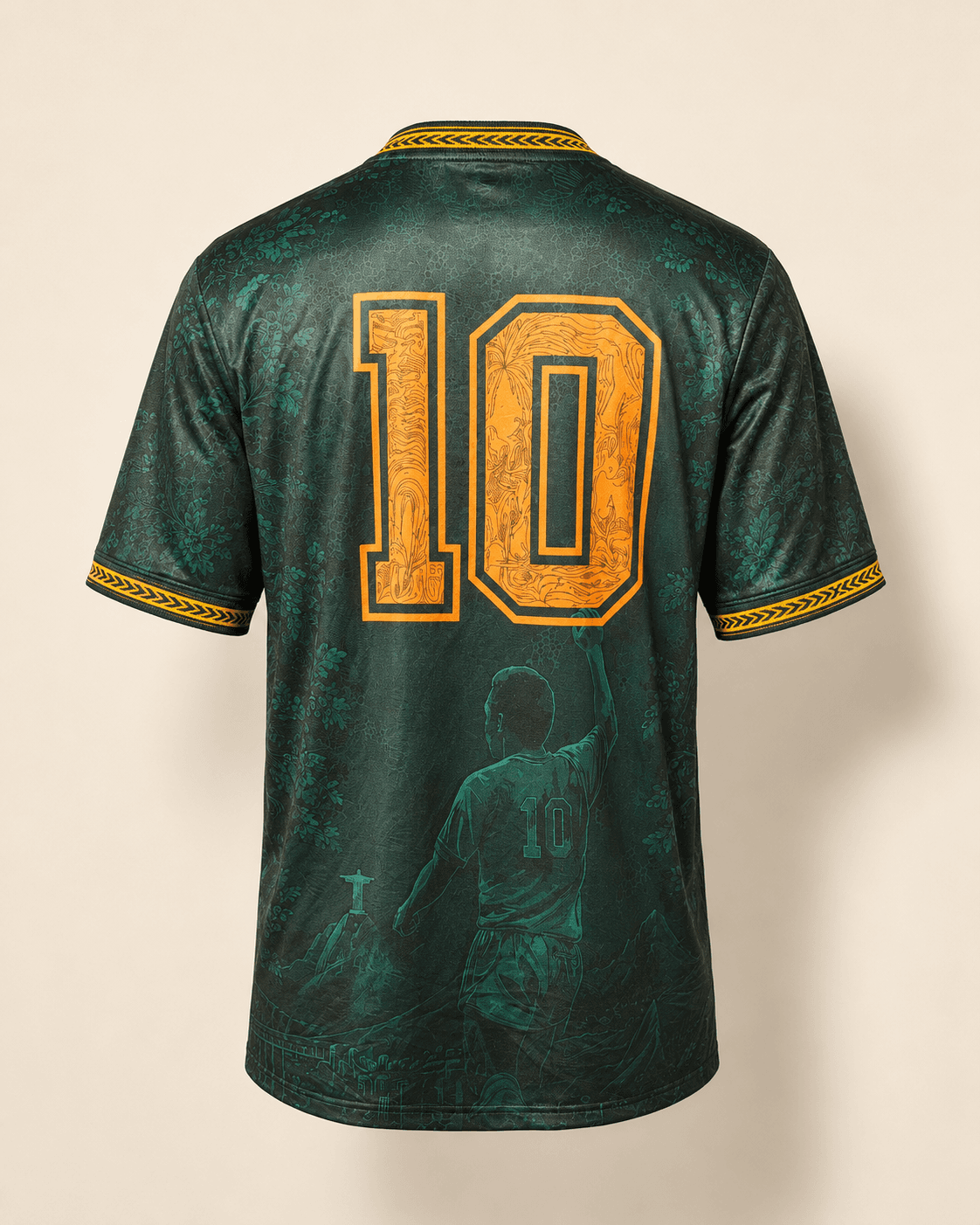
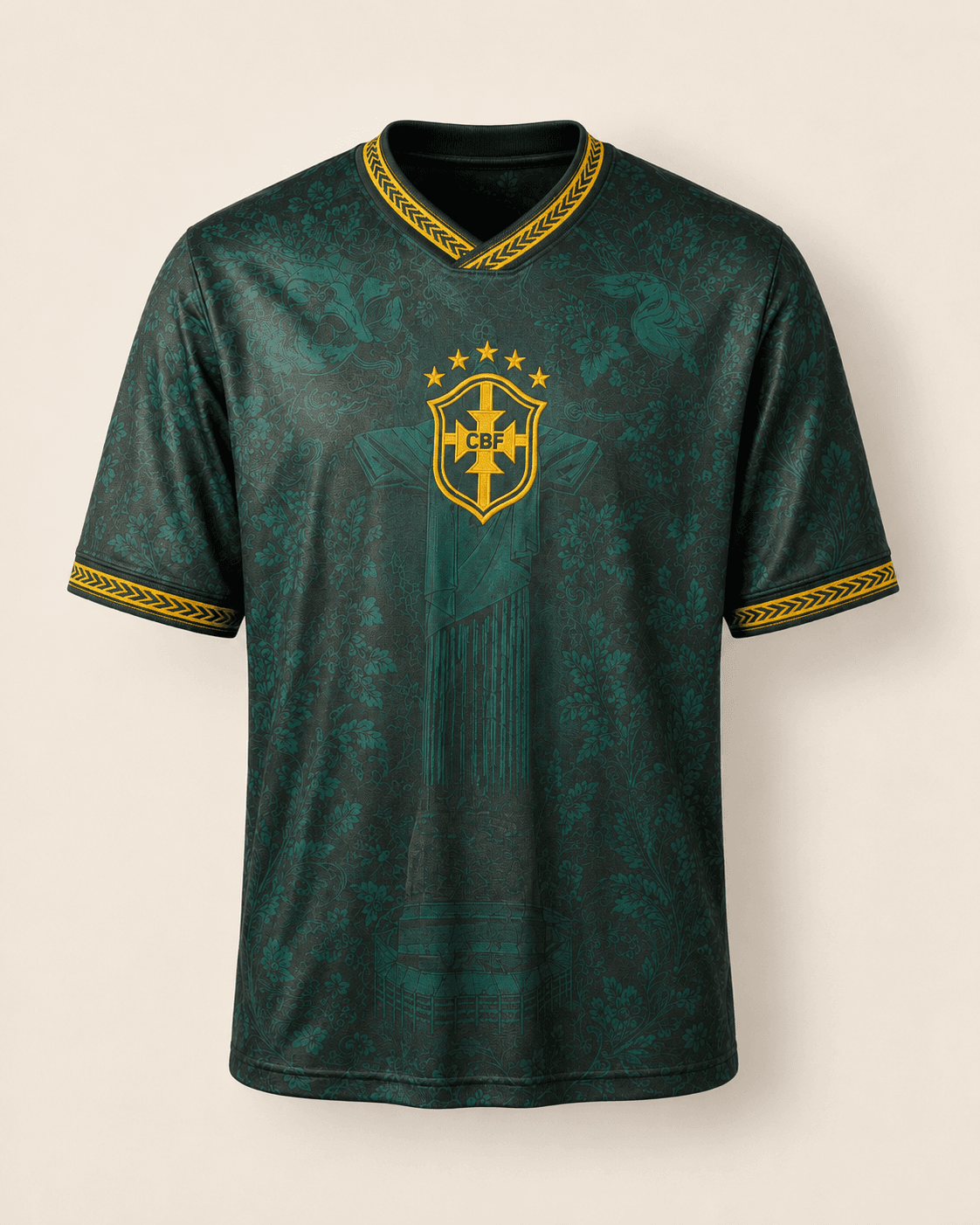
An ode to the Seleção rendered in the language of the Amazon. Forest green replaces the canary yellow. Gold stays — gold belongs to Brasil. The jungle is woven into the cloth; a number ten carries Pelé's silhouette across the back.
BDT · ships from Dhaka
Numbered to 300 · very limited
Size
Cut to be worn oversized.
Pick a body profile, then give your height and weight — we estimate your chest (women and men of the same height/weight measure differently) and match it to the cut. Know your exact chest? Enter it for the most precise result. A guide, not a promise — measurements are approximate.
| Size | Chest | Length |
|---|---|---|
| S | 40″ | 26″ |
| M | 42″ | 27″ |
| L | 44″ | 28″ |
| XL | 46″ | 29″ |
| XXL | 48″ | 30″ |
- Chest
- Measure around the fullest part of your chest.
- Length
- Measure from the highest point of the shoulder (next to the collar) straight down to the bottom hem.
Please note: measurements are approximate and may vary by ±1 inch.
Cash on delivery or bKash · we confirm on WhatsApp
Wrong size? Exchange within 7 days — as long as the tag’s still on.
Dhaka 2–3 days · elsewhere 3–5
Verde · Brasil — the concept
A jungle on a jersey, and a number that doesn't need a name.
Brasil, before it is a flag, is a forest. Verde reads the Seleção through that older fact — the canopy of the Amazon and the Mata Atlântica, the bromeliad, the orchid, the dark green that catches light only at angle. Yellow is in the trim, in the chevron at the collar, in the crest. The rest is the forest.
The cloth is heavyweight loopwheel cotton at 380gsm, woven with a tonal jacquard of jungle flora and the Pelé silhouette repeating faintly through the body. The CBF crest is embroidered, not printed. The collar is knit separately to hold its shape. The number on the back is filled with another layer of jungle, so the closer you get, the more of the country you see.
Worn the way Pelé wore his shirts: oversized, heavy on the shoulders, the heart sitting precisely at the heart. Numbered to 300.
Study · six frames
Every motif, named.
I. Head-on
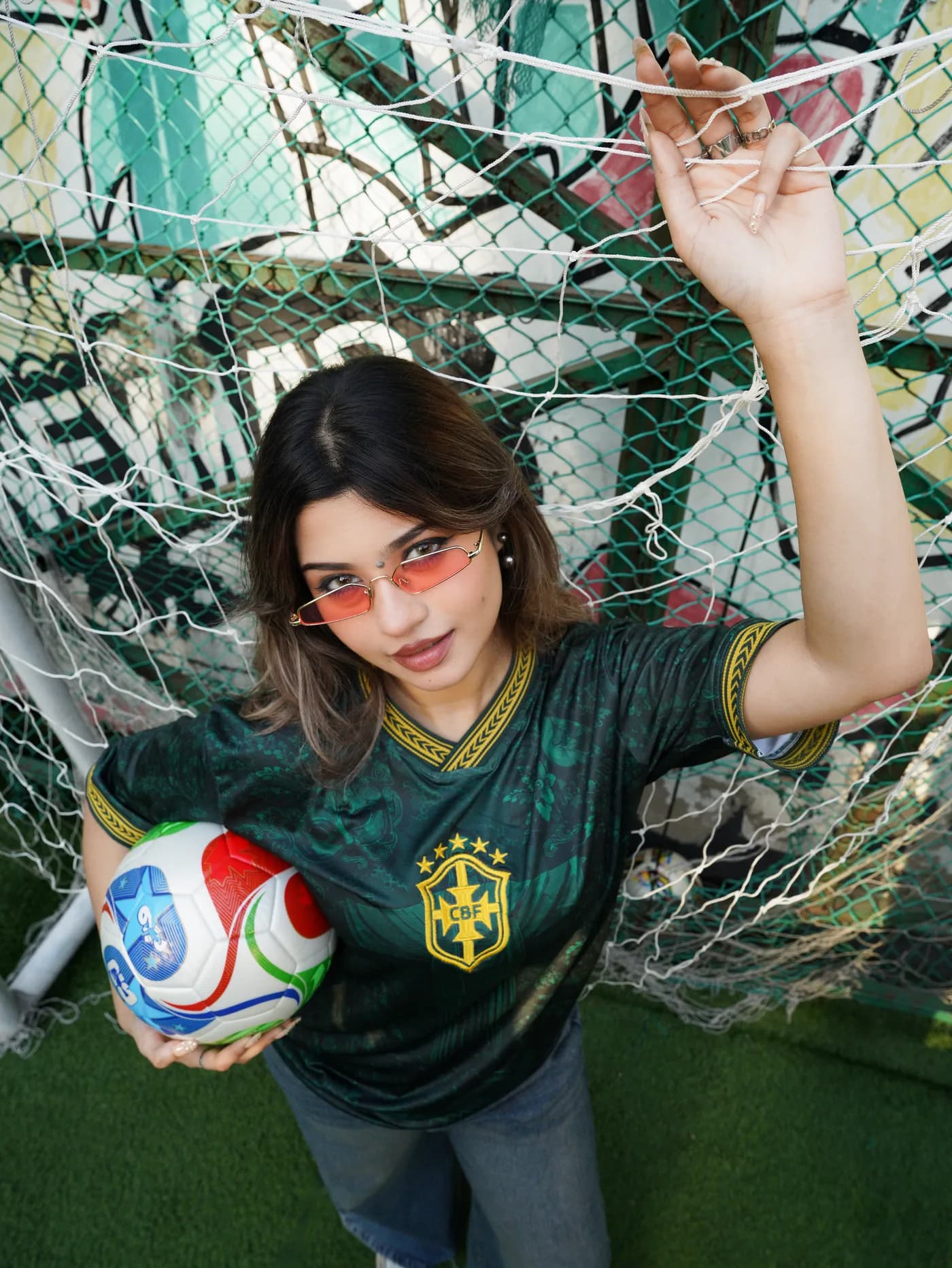
Forest green stands in for canary yellow. We chose the colour of the Amazon over the colour of the kit cupboard because Brasil, before it is a flag, is a forest. The CBF crest sits where it has always sat — five stars for 1958, 1962, 1970, 1994, 2002. Woven into the cloth, just visible at angle, are bromeliad and orchid jacquards traced from the Mata Atlântica. The gold chevron at the collar runs the rhythm of a samba block.
II. The Ten
The most argued number in football, settled here in gold against the canopy. The digits are filled, not outlined — a second layer of jungle works inside the strokes, so close-up the number itself becomes a landscape. Beneath it: a body arched horizontal in the air, both feet to the sky. We don't name him. You already know. (For the record: Estádio Heysel, 19 September 1968, Belgium 0 — Brasil 3.)
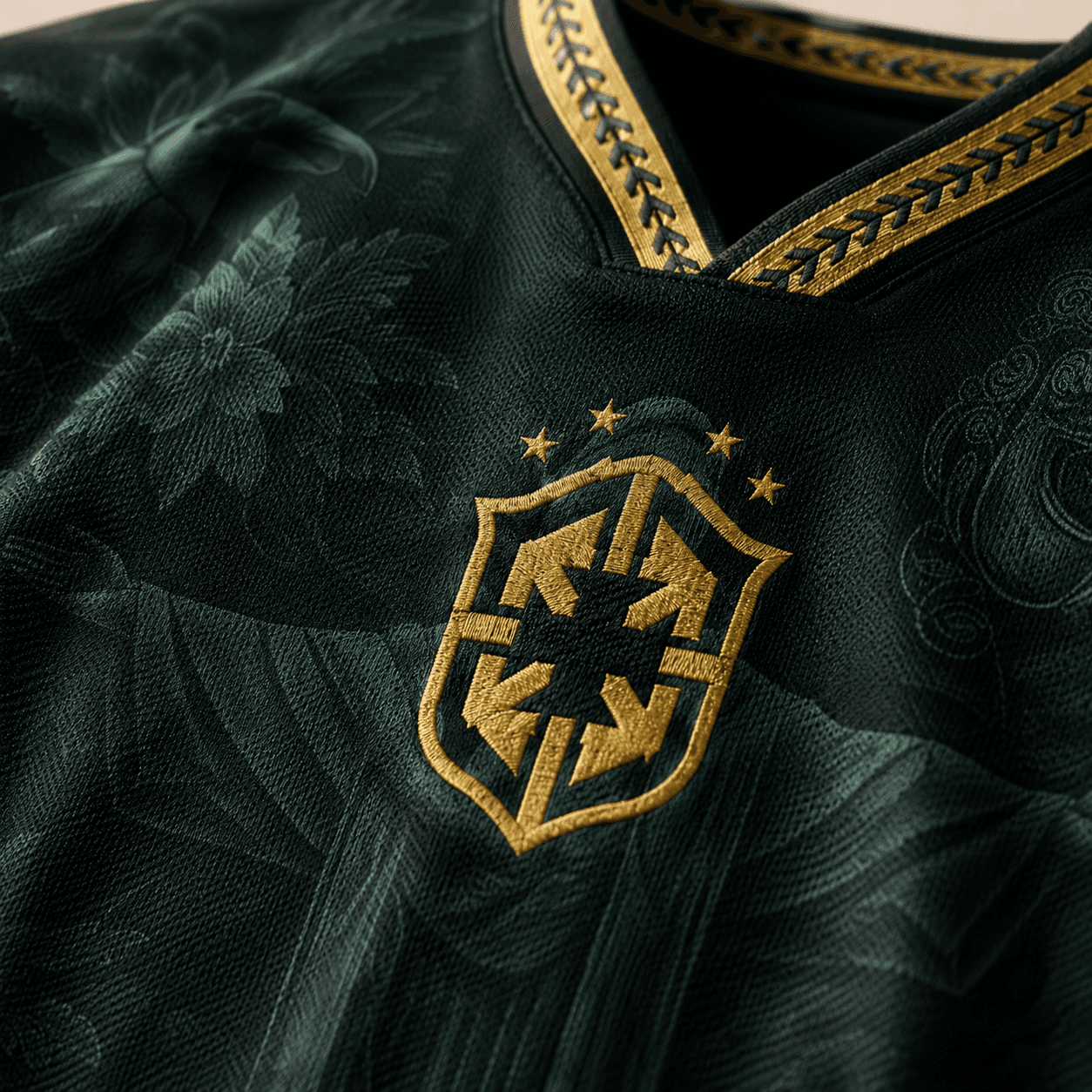
III. The Heart
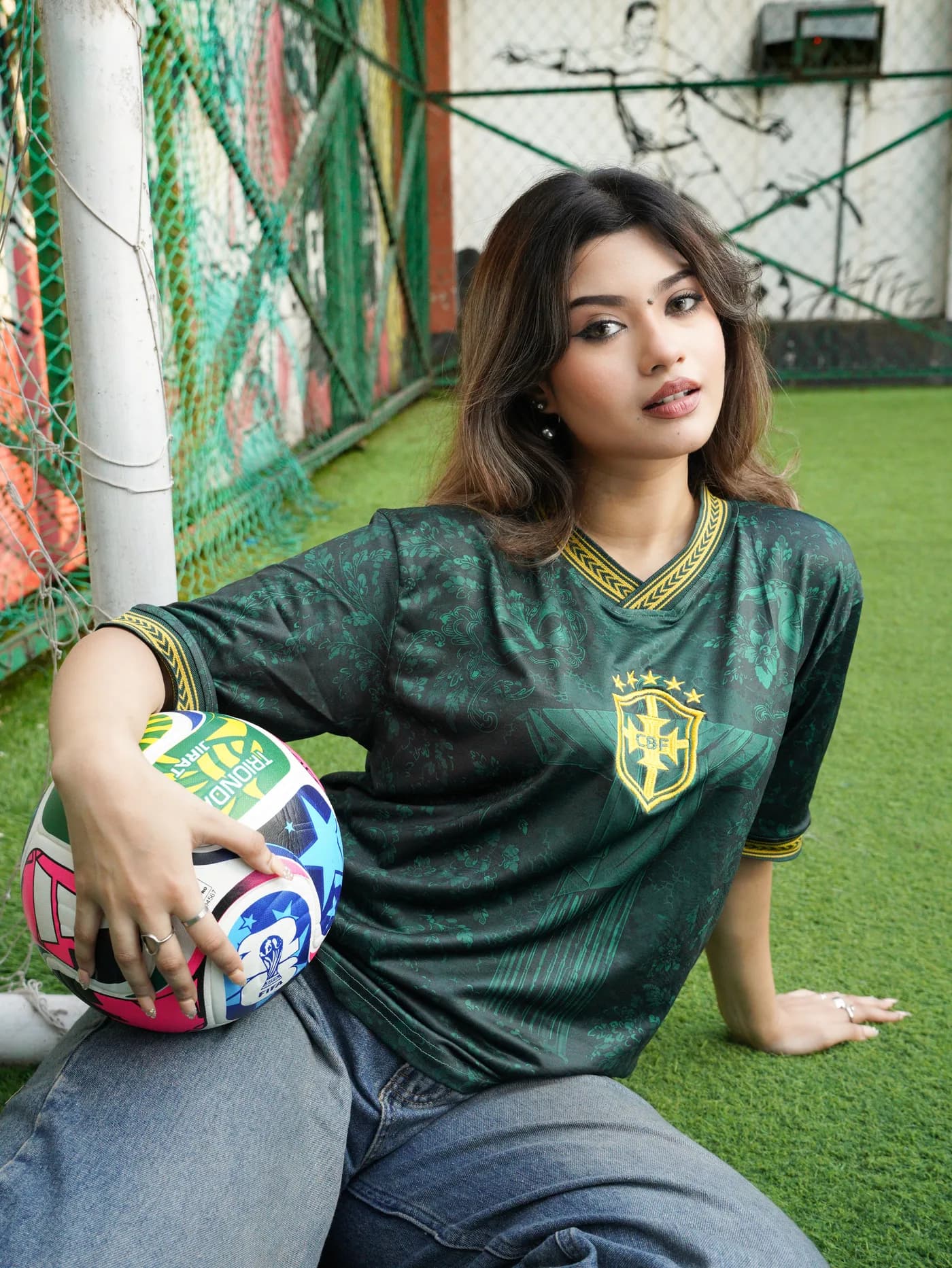
The Confederação Brasileira de Futebol crest, embroidered in matte gold over where the heart sits. Around it, the bromeliad jacquard continues — you can see the floral relief only at angle, which is the point. The collar carries a hand-stitched gold chain; a narrower line of chevrons runs the V-neck. Every motif is woven into the cotton, not printed onto it.
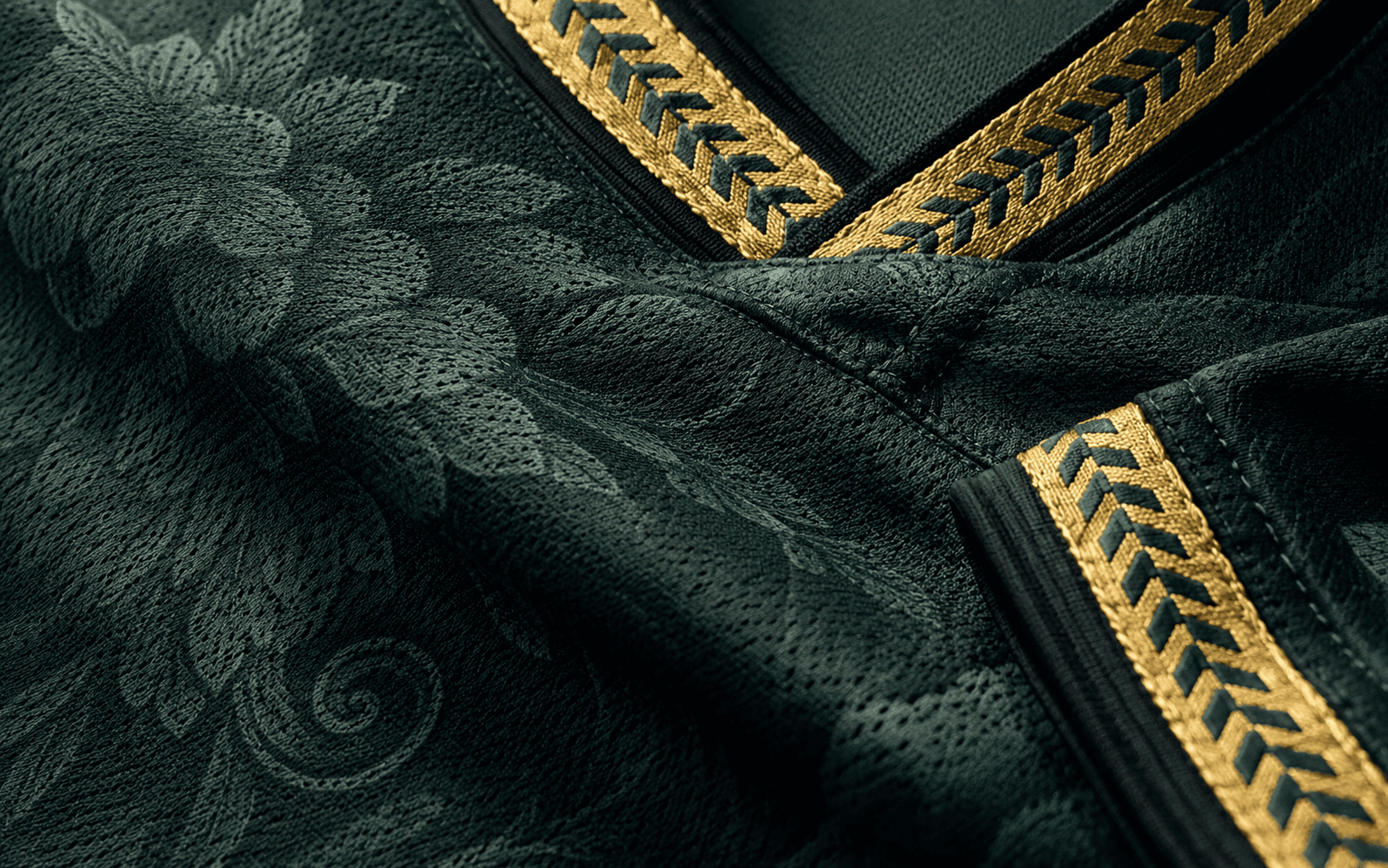
IV. The Cloth
Cuff and side seam, photographed at angle so the jacquard reveals itself. Heavyweight 380gsm loopwheel cotton — the kind of weight that drapes once and stays drapped. The same gold chevron from the collar repeats here, narrower. The flora is bromeliad and orchid, repeated tonally so it reads as texture across the room and as botanical study up close.
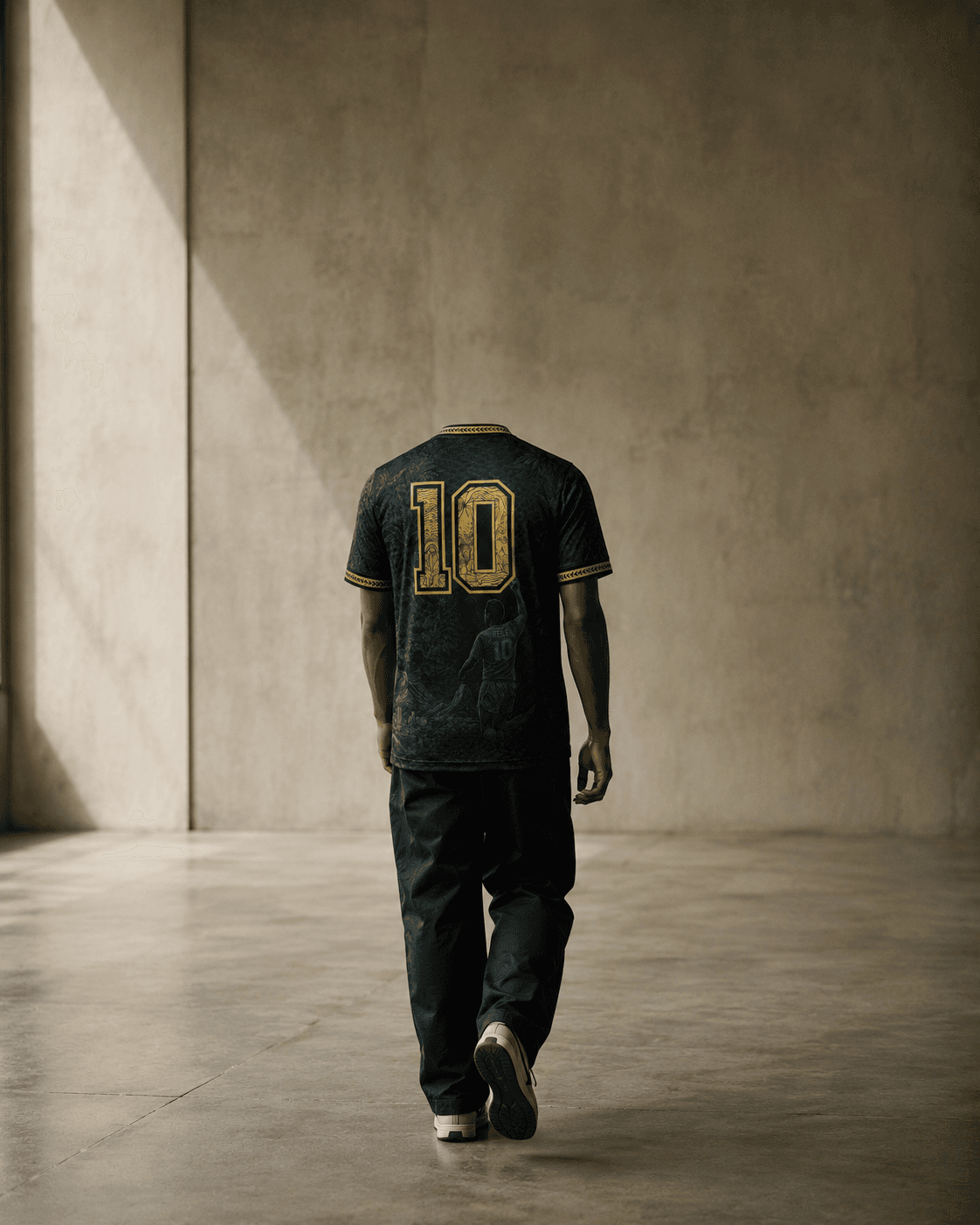
V. Off the rack
Concrete walls, a single high window, one long diagonal of sun across the floor. From this distance the ten reads first; the Pelé ghost is more felt than seen until you step closer. The jersey is built to do this — to read at thirty metres and again at thirty centimetres, and to mean a different thing both times.
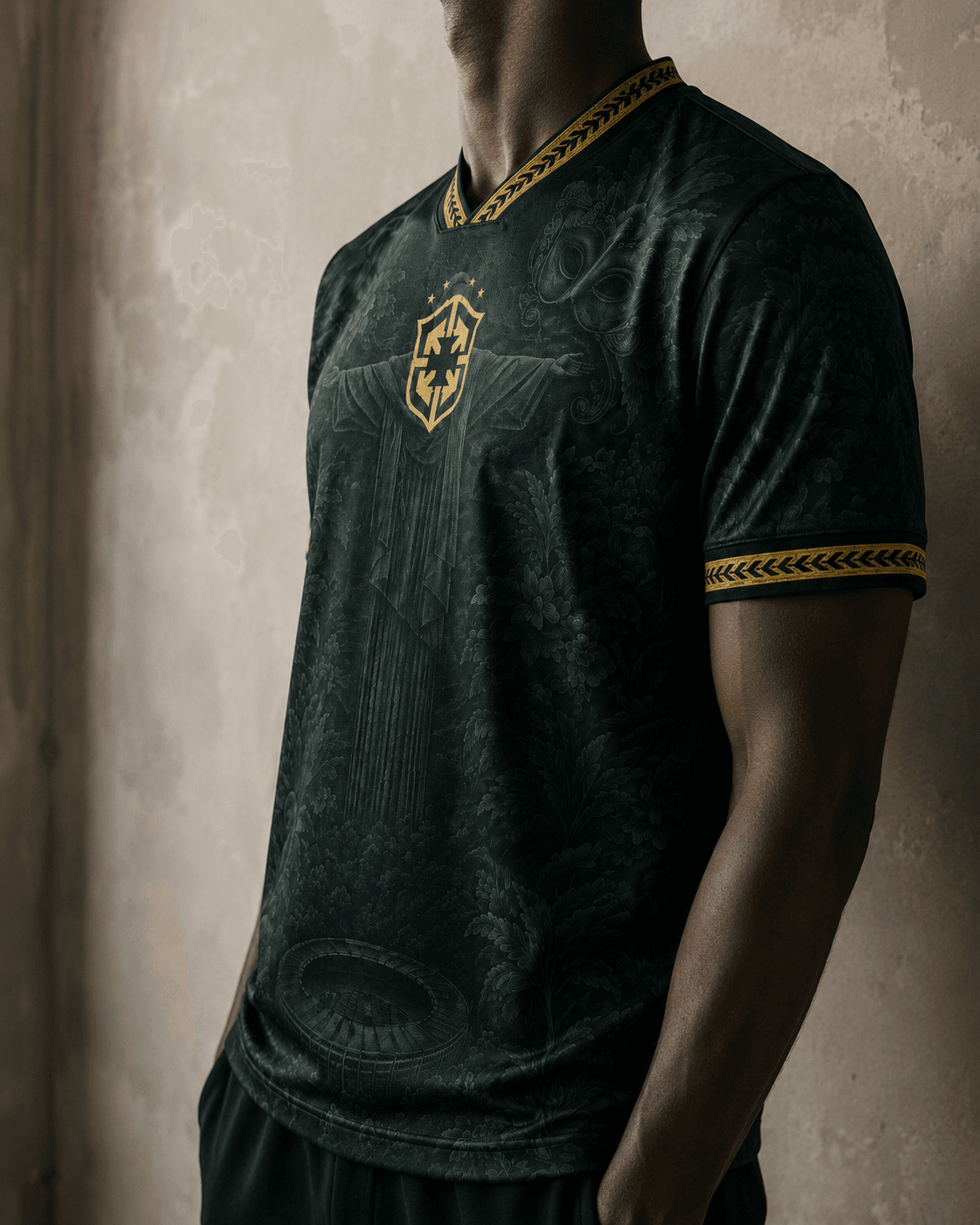
VI. Worn
The cloth drapes the way 380gsm wants to drape — heavy, dry-handed, slightly architectural at the shoulder. The crest sits exactly at the heart. The collar holds its shape because it was knit, not cut from the body cloth. The jungle is only there when you turn into the light.
In the lookbook
Worn in.